All-Purpose Flour
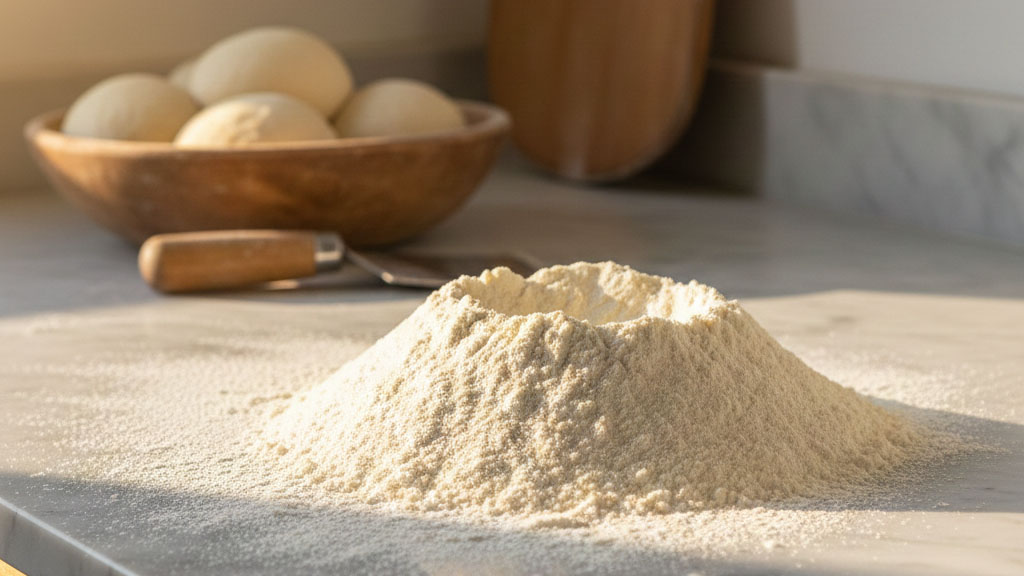
All-purpose flour is made from a blend of hard and soft wheat, giving it moderate protein content, usually around 10–11 percent. It is designed to work reasonably well across a wide range of recipes.
Characteristics :
- Balanced gluten development.
- Medium absorption.
- Neutral flavor.
- Widely available.
Best uses :
- Cookies
- Muffins
- Pancakes and waffles
- Quick breads
- Everyday cakes
Notes :
All-purpose flour is convenient, but it is rarely the best flour for specialized baking. Cakes may be slightly firmer, and breads slightly less chewy compared to using purpose-specific flours.
Cake Flour
Cake flour is made from soft wheat and finely milled. It has a low protein content, typically 7–9 percent, and is often bleached, which improves starch gelatinization and tenderness.
Characteristics :
- Very fine texture.
- Low gluten formation.
- High starch content.
- Light, delicate crumb.
Best uses :
- Sponge cakes
- Chiffon cakes
- Angel food cakes
- Layer cakes and cupcakes
Notes :
Cake flour absorbs liquid quickly and produces a soft structure. Substituting all-purpose flour will result in a denser cake unless adjustments are made.
Bread Flour
Bread flour is milled from hard wheat and contains 12–14 percent protein, allowing strong gluten networks to form.
Characteristics :
- High elasticity and strength.
- Excellent gas retention.
- Higher water absorption.
- Chewy texture.
Best uses :
- Yeast breads
- Pizza dough
- Bagels
- Focaccia and artisan loaves
Notes :
Bread flour creates structure and chew. Using it in cakes or cookies often results in toughness unless balanced carefully.
Pastry Flour
Pastry flour falls between cake flour and all-purpose flour in protein content, typically 9–10 percent.
Characteristics :
- Moderate gluten development.
- Soft but structured crumb.
- Balanced absorption.
Best uses :
- Pie crusts
- Tarts
- Biscuits
- Shortcrust pastry
Notes :
Pastry flour allows dough to hold its shape while remaining tender. It is ideal for laminated or delicate pastry work.
Self-Raising Flour
Self-raising flour is all-purpose flour with baking powder and salt already added.
Characteristics :
- Consistent leavening.
- Convenient and time-saving.
- Limited flexibility.
Best uses :
- Simple cakes
- Scones
- Quick breads
Notes :
Because leavening is pre-mixed, recipes must be followed precisely. Additional baking powder or soda usually needs to be reduced or omitted.
Whole Wheat Flour
Whole wheat flour contains the bran, germ, and endosperm, making it more nutritious but more challenging to work with.
Characteristics :
- Higher fiber content.
- Strong, nutty flavor.
- Increased liquid absorption.
- Heavier crumb.
Best uses :
- Whole-grain breads
- Rustic loaves
- Health-focused baking
Notes :
The bran interferes with gluten formation, so doughs often benefit from longer hydration or partial substitution with white flour.
00 Flour
00 flour is an Italian flour classification based on fineness, not protein. It is extremely finely milled and varies in protein depending on brand.
Characteristics :
- Silky texture.
- Excellent extensibility.
- Smooth dough handling.
Best uses :
- Neapolitan-style pizza
- Fresh pasta
Notes :
Despite its softness, many 00 flours have enough protein for strong doughs due to fine milling.
Rye Flour
Rye flour contains little gluten-forming protein and relies on starches and gums for structure.
Characteristics :
- Dense texture.
- Earthy, complex flavor.
- High enzymatic activity.
Best uses :
- Rye breads
- Sourdough blends
Notes :
Rye doughs are sticky and fragile. They are often combined with wheat flour for better structure.
Spelt Flour
Spelt is an ancient grain related to wheat. It has a softer gluten structure and slightly sweet, nutty flavor.
Characteristics :
- More soluble gluten.
- Lower elasticity.
- Faster hydration.
Best uses :
- Artisan breads
- Cookies
- Pancakes
Notes :
Spelt doughs require gentler handling and less mixing to avoid collapse.
Gluten-Free Flours
Gluten-free flours come from grains, legumes, or nuts such as rice, corn, almond, or tapioca.
Characteristics :
- No gluten formation.
- Require binders for structure.
- Highly varied absorption.
Best uses :
- Gluten-free baking
Notes :
Successful gluten-free baking relies on flour blends and binders like xanthan gum or psyllium husk.
Storage Tips for Flour
- Store in airtight containers.
- Keep in a cool, dry place.
- Discard flour with off smells.
Understanding flour allows you to control structure, moisture, and texture with confidence. Once you choose flour intentionally rather than by habit, baking becomes more precise and predictable.