Baking Powder
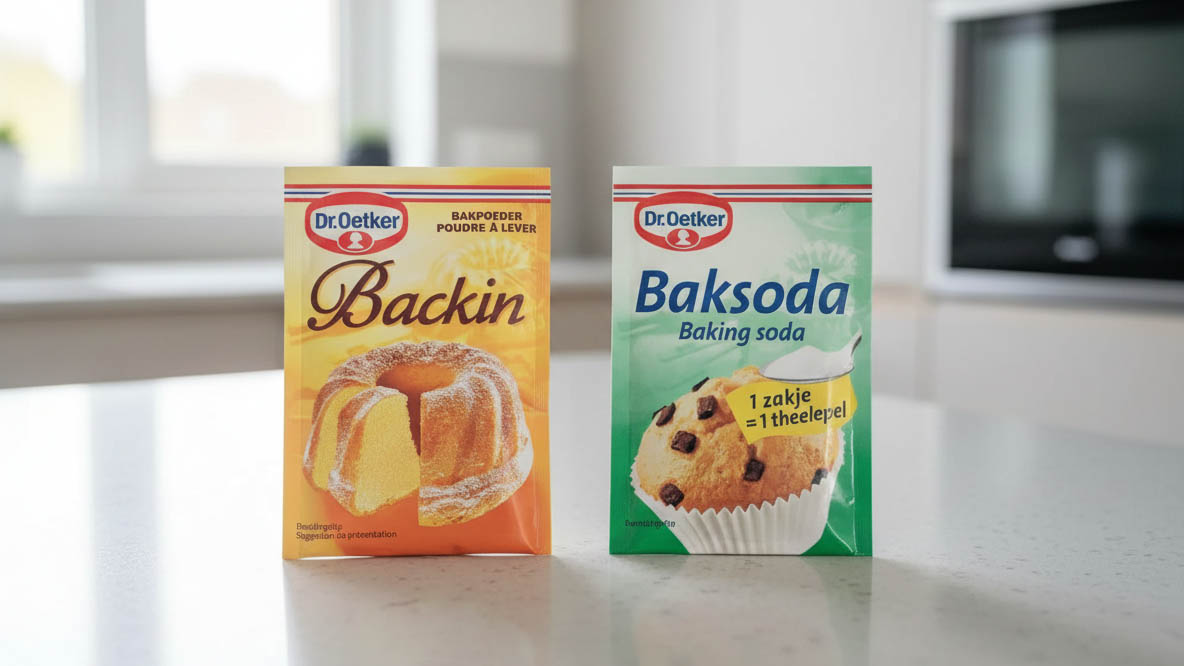
Baking powder is a complete leavening system. It contains three components: baking soda, one or more acids, and a moisture-absorbing agent such as cornstarch. Because the acid is already included, baking powder does not require additional acidic ingredients in the recipe to work.
When baking powder is mixed with liquid, it produces carbon dioxide. Most modern baking powders are double-acting, meaning they release gas twice, once when mixed with liquid and again when exposed to heat in the oven.
Baking powder is especially useful in recipes that do not contain acidic ingredients like yogurt, buttermilk, or citrus juice.
Key points :
- Contains baking soda plus acid.
- Works without added acidic ingredients.
- Suitable for cakes, cookies, and quick breads.
- Available as single-acting or double-acting.
- Double-acting baking powder reacts during mixing and baking.
Baking Soda
Baking soda, also known as sodium bicarbonate (NaHCO₃), is a base, not a complete leavening agent. It requires an acid to activate. When combined with acidic ingredients such as lemon juice, yogurt, cocoa powder, or vinegar, it produces carbon dioxide gas that causes baked goods to rise.
Baking soda is very strong, so only a small amount is needed. Using too much can result in a bitter or soapy taste and a coarse texture. For this reason, it must be carefully balanced with enough acid in the recipe.
Key points :
- Pure sodium bicarbonate.
- Requires an acidic ingredient to activate.
- Produces a strong and fast rise.
- Best for recipes with natural acidity.
- Too much can negatively affect flavor.
Baking soda is also used outside of baking as a cleaning and deodorizing agent due to its mild alkaline properties.
When to Use Baking Powder, Baking Soda, or Both
- Use baking soda when the recipe contains sufficient acidic ingredients.
- Use baking powder when there are no acidic components present.
- Use both when a recipe needs extra lift or contains acid but not enough to fully activate the baking soda.
Many cakes and muffins use a combination of both to achieve the right balance of rise, texture, and flavor.
Interesting Historical Facts
- Baking powder was invented in 1843 by Alfred Bird, offering a reliable alternative to yeast. Its convenience and consistency quickly made it popular in home baking.
- Baking soda has been used for thousands of years for medicinal, culinary, and cleaning purposes. It became widely used in baking after being refined through chemical processes developed by Nicolas Leblanc.
- In the mid-19th century, both baking soda and baking powder were often sold in bulk and could contain impurities. Advances in industrial manufacturing later improved purity and consistency.
- Today, baking powder and baking soda remain fundamental ingredients in both traditional and modern baking worldwide.
Tips for Best Results
- Always measure accurately, small differences matter.
- Mix baking soda and baking powder thoroughly with dry ingredients.
- Check expiration dates, old leavening agents lose strength.
- Store in a cool, dry place with the container tightly sealed.
- If a recipe tastes bitter, the leavening balance may be off.
Understanding the difference between baking powder and baking soda gives you more control over texture, rise, and flavor. Once you know how they work, you can confidently adjust recipes and troubleshoot baking problems with ease.