Instant Yeast
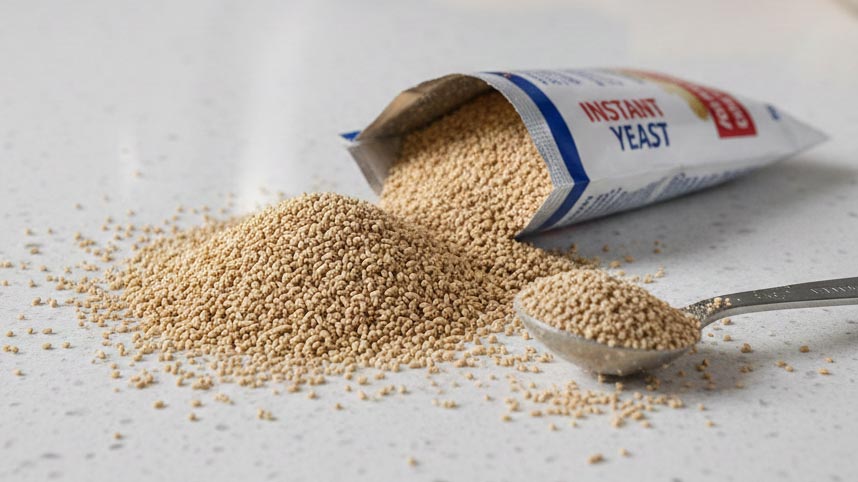
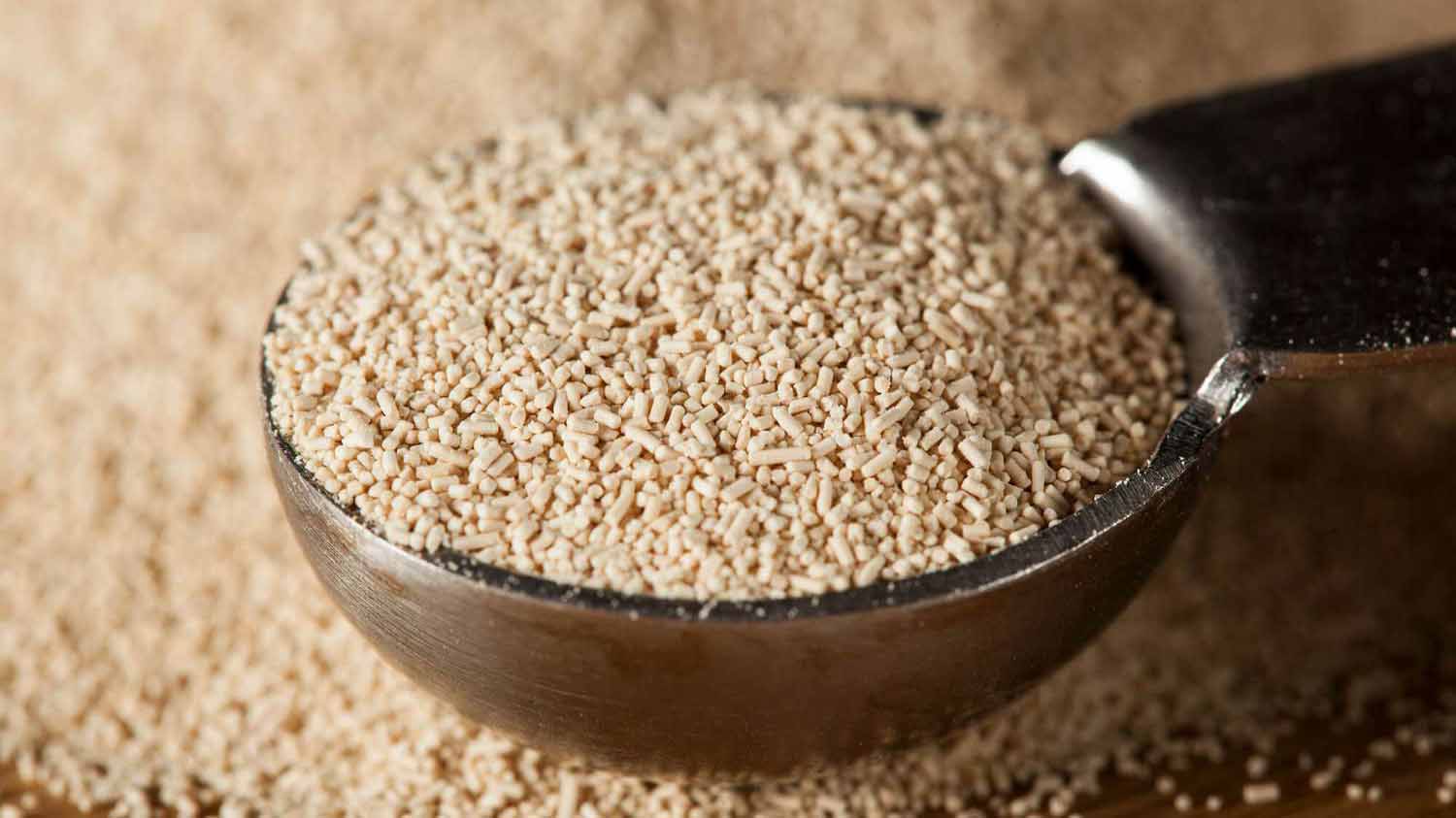
Instant yeast is processed into very fine granules and is sometimes labeled as rapid-rise or bread machine yeast. Because of its small particle size and higher percentage of live yeast cells, it activates quickly and does not require proofing in warm liquid.
Instant yeast can be mixed directly into the dry ingredients and is ideal for recipes that require shorter fermentation times. Doughs made with instant yeast typically rise faster than those made with active dry yeast.
Key characteristics :
- No yeast activation required (Does not need to be dissolved in warm liquid before mixing).
- Very fine granules that dissolve quickly in dough.
- Fast and reliable fermentation.
- Convenient for both hand mixing and bread machines.
- Suitable for most modern bread recipes.
Active Dry Yeast
Active dry yeast consists of larger granules coated with a protective layer, which means it usually needs to be dissolved and activated in warm liquid before being mixed into the dough. This step is often called proofing the yeast and helps ensure the yeast is alive and active.
When mixed with warm water or milk (about 35–40°C), active dry yeast will begin to foam within 5 to 10 minutes. Once activated, it can be added to the rest of the ingredients.
Because of this activation step, active dry yeast adds a little extra time to the bread-making process. If the liquid is too hot, the yeast can be damaged. If it’s too cold, activation may be slow or incomplete. Improper activation can lead to poor rise and a denser crumb.
Despite this, active dry yeast remains a popular and dependable choice, especially for traditional recipes and methods developed before instant yeast became widely available. When handled correctly, it produces consistent results and good flavor development.
Key characteristics :
- Requires yeast activation (must be dissolved in warm liquid before mixing).
- Larger granules with a protective coating.
- Foams when active, making it easy to test viability.
- Slower start than instant yeast, but reliable fermentation.
- Well suited to traditional bread recipes.
Fresh Yeast
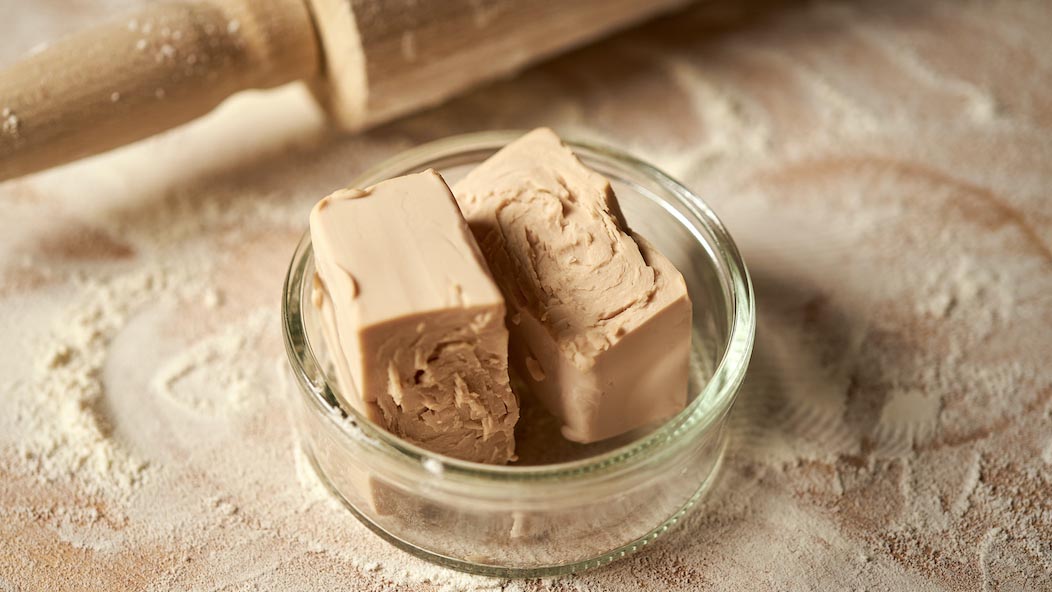
Fresh yeast, also known as cake yeast or compressed yeast, is widely used in professional bakeries. It comes in solid blocks and has a high moisture content, which makes it highly active and easy to incorporate into dough.
Many bakers appreciate fresh yeast for its clean, subtle aroma and consistent fermentation. It is also more forgiving across a range of temperatures. However, it is highly perishable and must be refrigerated. Once opened, it should be used within a few days.
Fresh yeast is harder to find in regular supermarkets and is less commonly used in home baking for this reason.
Key characteristics :
- Moist and highly active.
- Short shelf life.
- Must be refrigerated.
- Preferred by many professional bakers.
Can Yeasts Be Used Interchangeably?
Yes, most yeast types can be substituted for one another with adjustments to quantity and rising time. Instant yeast generally requires a smaller amount than active dry yeast, while fresh yeast requires a larger quantity.
Always follow the method recommended in your recipe and adjust fermentation times as needed. Even small differences in yeast behavior can affect dough structure and flavor.
How to Test Dry Yeast for Activity
Dry yeast can lose potency over time, especially if stored improperly.
To test whether your yeast is still active:
- Dissolve a small amount of yeast in warm water (around 35–40°C).
- Add a pinch of sugar.
- Wait 5 to 10 minutes.
If the mixture becomes foamy, the yeast is active. If nothing happens, the yeast is no longer usable and should be replaced.
Understanding how different types of yeast work allows you to bake with more confidence and consistency. Whether you prefer speed, tradition, or flavor, choosing the right yeast helps ensure your bread rises properly and tastes its best.