Dairy Whipped Cream
Traditional whipped cream is made from dairy cream. To whip properly and hold its shape, the cream must contain at least 30 percent milk fat. Creams with a higher fat content, around 35 to 40 percent, are even more stable and are often preferred by professional bakers.
When whipped, air is incorporated into the fat, creating a light and fluffy texture. Timing is important.
- Underwhipped cream will be soft and unstable.
- Overwhipped cream will separate and turn grainy, eventually becoming butter.
Because it’s made from dairy, whipped cream has a rich flavor but a relatively short lifespan. It softens quickly at room temperature, can turn slightly yellow, and does not tolerate heat well.
Best uses :
- Fresh cakes and desserts.
- Light toppings where flavor matters most.
- Desserts served shortly after preparation.
Imitation Whipped Cream
Imitation whipped cream is usually made from vegetable fat, milk proteins, water, sugar, emulsifiers, and stabilizers. It is designed to be more stable and easier to work with than dairy cream.
This type of cream whips up quickly, stays bright white, and holds its shape for much longer. It is also more resistant to heat, making it ideal for warm environments, transport, and commercial use. Many products are pre-sweetened, which adds convenience but also means you need to watch the sugar content.
While imitation whipped cream is practical, it is not necessarily healthier. Some brands contain high levels of sugar, additives, or even trans fats. Always check the ingredient list.
Best uses :
- Decorated cakes that need to last longer.
- Warm or humid environments.
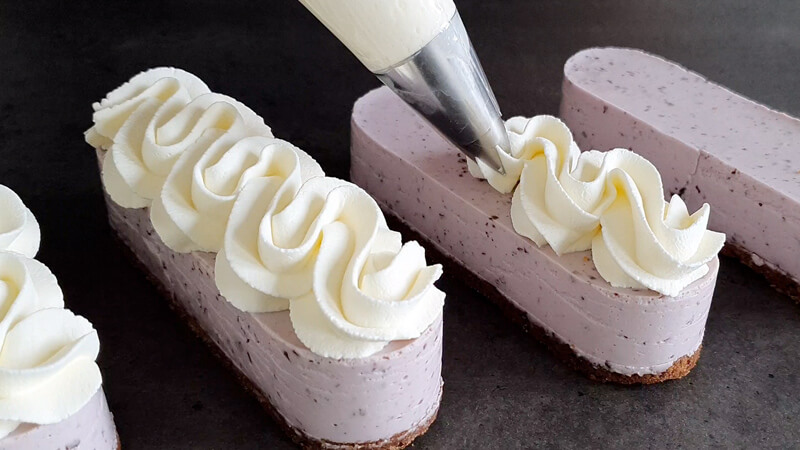
- Piped decorations and sharp edges.
- Commercial or large-scale baking.
Which One Should You Choose?
There’s no single right answer. It depends on what you need. Choose dairy whipped cream if flavor is your top priority and the dessert will be served fresh. Choose imitation whipped cream if stability, appearance, and shelf life matter more than taste. Many professional bakers use both, depending on the project.
Tips for Best Results
Working with dairy whipped cream :
- Use very cold cream straight from the fridge.
- Chill your mixing bowl and beaters for better results.
- Add sugar and vanilla sparingly, too much can affect stability.
- Stop whipping as soon as stiff peaks form.
Working with imitation whipped cream :
- Choose brands with lower sugar and no trans fats.
- Follow the manufacturer’s instructions closely.
- Avoid overwhipping, even stable creams can break if pushed too far.
Get Creative
Whipped cream isn’t just for topping cakes. You can :
- Use it as a light frosting.
- Flavor it with cocoa powder, coffee, citrus zest, or spices.
- Pair it with fruit, pastries, or chilled desserts.
Just remember, whipped cream is a treat. Enjoy it in moderation and balance it with a varied diet. Whether you prefer the natural richness of dairy whipped cream or the practicality of imitation whipped cream, understanding the differences helps you choose the right one for every dessert. Experiment, practice, and most importantly, enjoy the process.