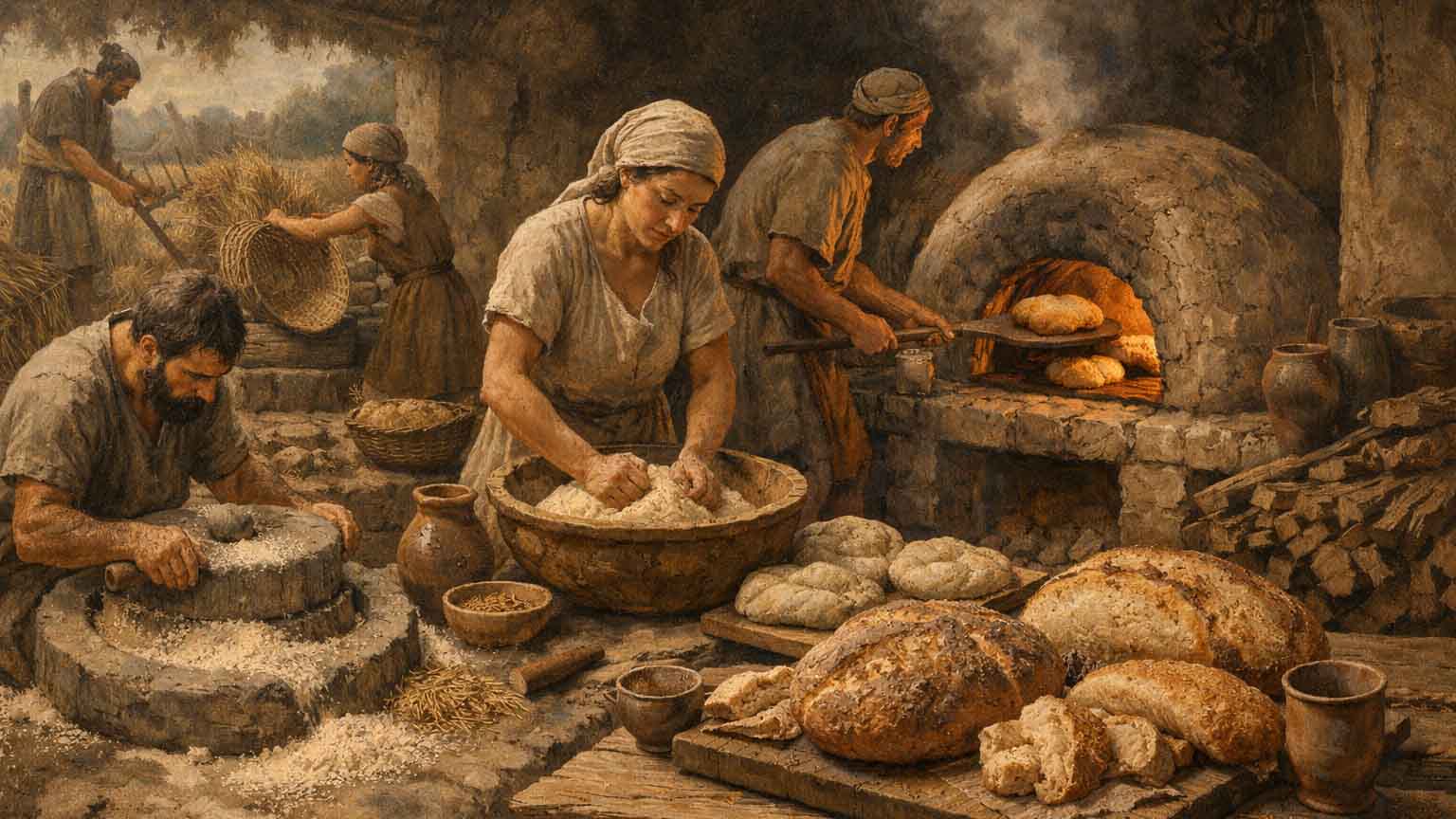
Across much of Europe, bread is inseparable from daily life. Crusty baguettes in France, rustic loaves in Italy, and dense, grain-rich breads in Germany all reflect local climates, agricultural traditions, and long histories of communal baking. In these regions, bread is more than nourishment. It is routine, identity, and memory, passed down through generations.
In the Middle East, bread holds an even deeper significance. Flatbreads such as pita appear at nearly every meal and are often treated with respect. Bread is used to scoop, wrap, and share food, reinforcing ideas of hospitality and togetherness. To share bread is to share life, and wasting it is often considered unthinkable.
Moving east into Asia, the picture shifts. Rice dominates much of the region, yet bread still has a place. In northern China, wheat-based steamed buns are a daily staple. In Japan, soft milk bread reflects a more modern adaptation, influenced by global exchange rather than ancient tradition. Here, bread exists alongside rice rather than replacing it, showing how food cultures expand rather than disappear.
Africa presents one of the richest and most varied food landscapes. In Ethiopia, injera made from fermented teff functions as both food and plate. In other regions, breads made from sorghum, millet, or maize reflect local crops and conditions. These breads are often flat, fermented, or cooked on hot surfaces instead of baked in ovens, demonstrating how environment shapes technique.
In the Americas, bread tells stories of encounter and adaptation. Corn-based tortillas in Mexico trace their origins to ancient civilizations, while cornbread in the United States reflects a blend of Indigenous ingredients and European methods. Bread here mirrors migration, resilience, and cultural blending.
So, does every culture have bread? In some form, bread or bread-like foods appear in most societies. Yet bread is not universal in the strict sense. In certain cultures, root vegetables, tubers, or grain porridges serve as the primary staple instead. These foods fulfill the same role as bread elsewhere: providing reliable nourishment and sustaining daily life.
What unites cultures is not bread itself, but the need for a dependable staple. Every society develops a core food shaped by climate, crops, and tradition. Sometimes that food is bread. Sometimes it is rice, cassava, millet, or maize.
Seen this way, bread is not a global constant but part of a larger human pattern. It is one of many answers to the same question humans have faced for thousands of years: how to turn the land into sustenance. Understanding this helps us see food not just as something we eat, but as a reflection of who we are and how we live.
So while not all cultures have bread, all cultures have something like it: a trusted food that nourishes bodies, anchors meals, and carries meaning far beyond the plate.