A Small Town, A Big Idea
The story takes us to the United States in the early 20th century, a time when everyday life was being reshaped by new machines and bold ideas. In 1928, in the modest town of Chillicothe, bread made history.
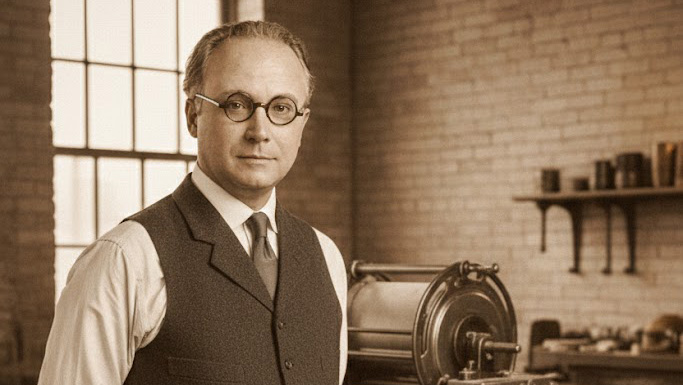
The man behind the breakthrough was Otto Frederick Rohwedder, an inventor and engineer with a simple but powerful vision. He believed bread should be sliced evenly and effortlessly, saving time and ensuring consistency in every household. What seems obvious today was anything but at the time.
Persistence Behind the Slice
Otto began working on a bread-slicing machine as early as 1912. Progress was slow and setbacks were severe. A fire destroyed his early prototype, wiping out years of work. Many would have given up. Otto did not.
After sixteen years of refinement and persistence, his idea finally became reality. His machine could slice an entire loaf quickly and uniformly, then wrap it to keep it fresh. This combination was crucial, since early critics feared sliced bread would go stale too fast.
The First Sliced Loaf
On July 7, 1928, history was made. The Chillicothe Baking Company became the first bakery to sell commercially sliced bread using Otto’s machine. The product was called Kleen Maid Sliced Bread, and it immediately caught public attention.
Customers loved it. No knives. No uneven cuts. No wasted effort. Bread suddenly became softer, easier to use, and perfectly suited for sandwiches and toast. Within months, sales soared, and other bakeries rushed to adopt the technology.
A Cultural Shift in Disguise
Sliced bread was more than a mechanical success. It reflected a broader shift in society toward convenience, efficiency, and time-saving solutions. Kitchens were changing, routines were speeding up, and people were beginning to expect everyday products to work smarter, not harder.
Chillicothe proudly declared itself the birthplace of sliced bread, and the idea spread rapidly across the country. By the 1930s, sliced bread was becoming the norm rather than the novelty.
Changing How We Eat
Once bread came pre-sliced, it opened the door to new habits and foods. Sandwiches became easier to assemble. Toast became more uniform. Home cooking adapted around the assumption that bread would arrive ready to use.
In this quiet way, Otto’s invention reshaped how people interacted with one of the world’s most basic foods. Bread was no longer just baked. It was engineered for modern life.
A Legacy in Every Slice
Every loaf of sliced bread today carries the imprint of Otto’s determination. Each neat, even slice reflects years of trial, failure, and persistence. What began as a practical solution to a small inconvenience became a symbol of innovation itself.
So the next time you hear someone say, “the best thing since sliced bread,” remember that it is not just a saying. It is a story of vision, patience, and the human urge to improve everyday life. One slice at a time.